
FB Procédés bar screens can be adapted to new or existing civil engineering. Their vertical design allows a wide range of installation configurations, whether in a channel, circular or straight station.
Each bar screen is designed to perfectly fit the civil engineering requirements, taking all constraints into account. There are thus an infinite number of possible configurations; however, we present here the most common installations.
Operation of an Automatic Bar Screen in a channel

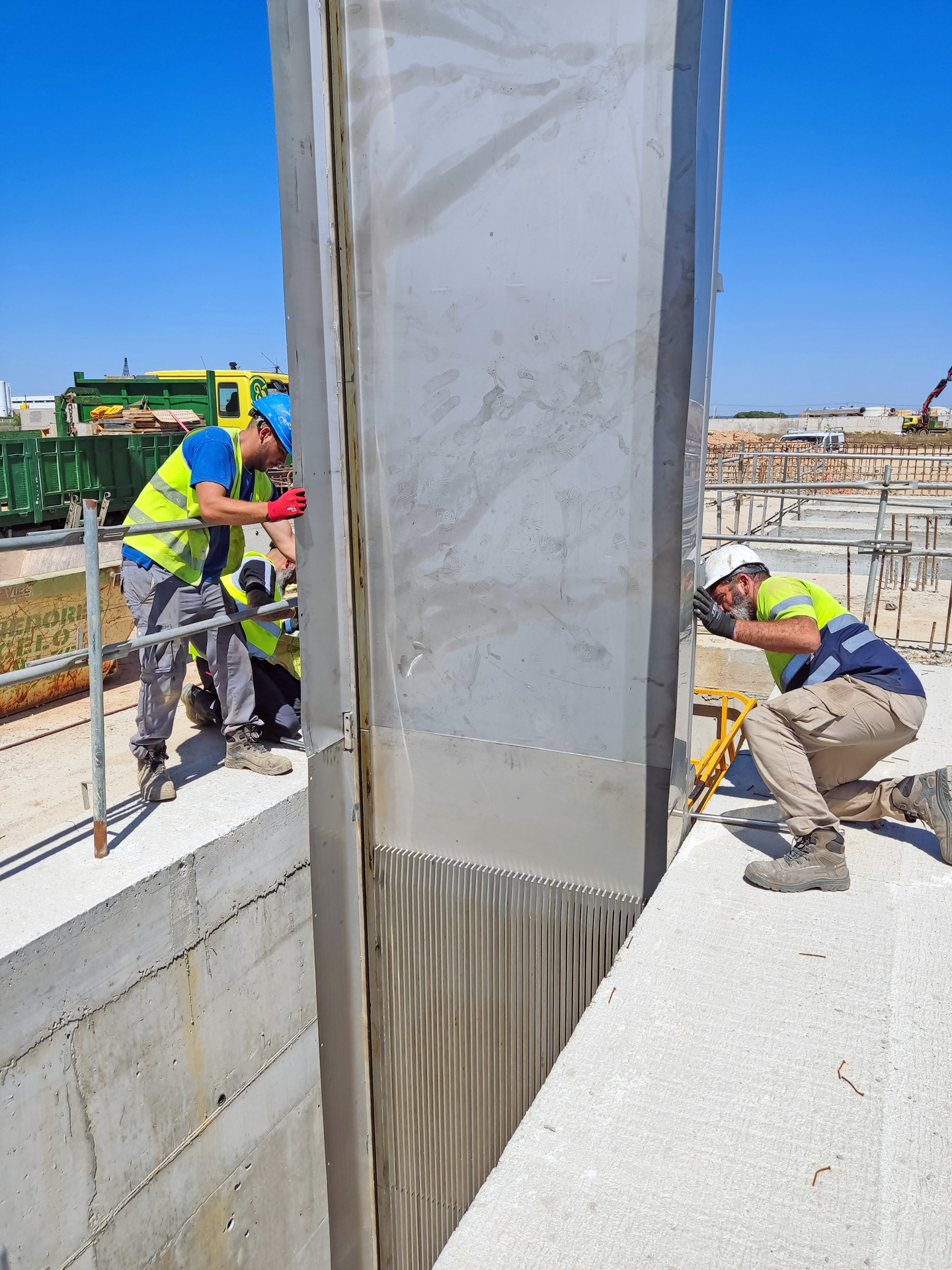
The automatic bar screen is installed across the effluent, with an upstream or downstream discharge depending on the model.
Depending on the flow rate and technical specifications, the bar screen can either span the width of the channel or have a smaller width, in which case a side deflector is installed.
The bar screen is attached in two places:
- at the bottom of the upper section, on top of the channel walls, using chemical dowels
- in the lower part, at the level of the approach receptacle, on the channel walls using mechanical pegs
For installation in existing civil engineering works, whether for a new installation or as a replacement for an existing bar screen, FB Procédés bar screens are designed to perfectly fit the existing civil engineering structure, thereby avoiding any modifications to it.

Automatic Bar Screen in straight or circular station

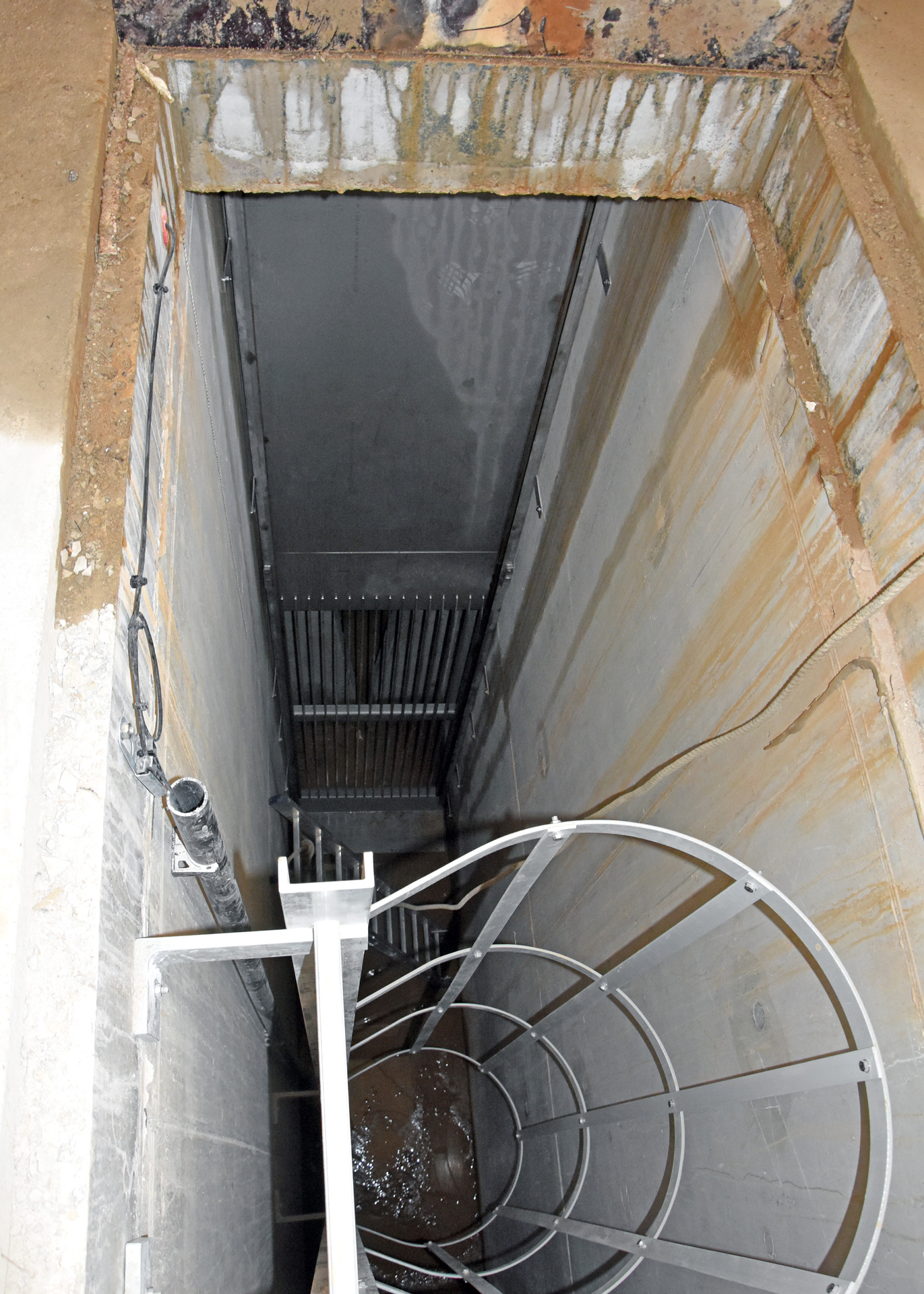
The FB Procédés vertical bar screens have the main advantage of taking up little space. This feature makes our vertical bar screens the best solution for installation in a straight or circular shaft.
The bar screen for a straight or circular shaft is specifically designed to measure according to the water level depth and the shaft diameter. The bar screen is then simply installed against the wall of the shaft.
This configuration minimizes the space occupied by the bar screen, leaving, for example, enough room to access the shaft. This is particularly useful for a pumping station, allowing easy and safe access to the pumps.
The bar screen is attached in two places:
- at the bottom of the upper part, on top of the substation, by chemical anchoring
- mechanically anchored to the substation wall at the bottom


